A Spreadsheet Full of Rosaries: Mainland Chamorros Take the Parish Fiesta on the Road

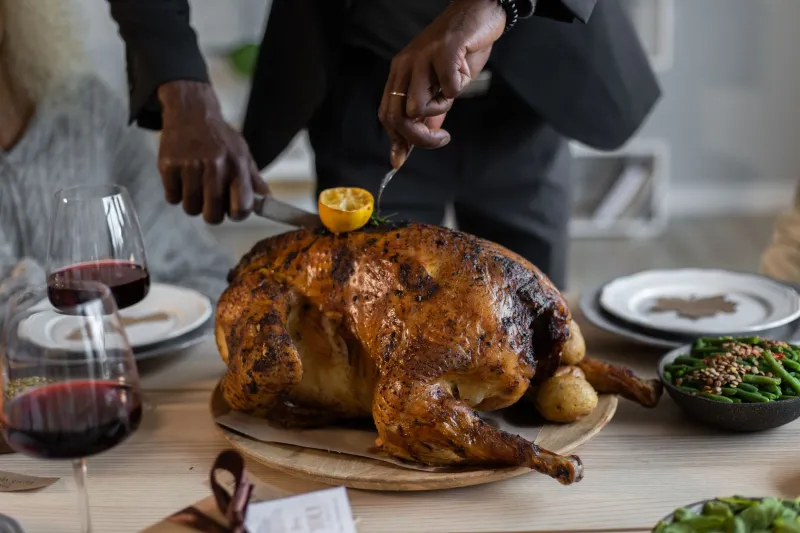
Photo: Chamorro family potluck church hall fiesta table red rice lechon, via images-wixmp-ed30a86b8c4ca887773594c2.wixmp.com
The first thing you notice is not the lechon. It is the link. Somewhere between a group chat and a church basement, a mainland Chamorro family opens a shared spreadsheet and starts rebuilding a Saipan parish fiesta cell by cell. One tab for the nobena schedule. One for who is bringing what. One for the hall deposit. One for the cousins who said “maybe” and need a gentle follow-up.
That spreadsheet is not a replacement for the fiesta. It is the flight case. It is how the feast of a patron saint gets packed up, carried across the Pacific, and set down again in a rented hall next to a supermarket parking lot. In 2026, that portable version of the fiesta is one of the most practical pieces of Chamorro culture on the mainland.
The Binder Starts as a Group Chat
Most of these fiestas do not begin with a committee. They begin with a message: “We should do something for the feast this year.” Then someone volunteers their garage. Someone else knows a priest who can say Mass in the hall. A auntie says she will handle the rosary if someone else handles the food. Within a week, the group chat has a date, a saint, and eleven opinions about whether the lechon should be ordered whole or by the tray.
That is where the spreadsheet comes in. Mainland families are using Google Sheets, Evite, SignUpGenius, and plain old paper binders to keep the fiesta from dissolving into a hundred separate texts. The document usually has a few familiar columns: prayer, food, setup, cleanup, money. It also has a column for “who is calling Auntie,” because someone has to make the call.
The tone is casual, but the structure is serious. A fiesta is not a potluck with a religious theme. It is a feast day with a potluck attached. The novena comes first. The rosary comes first. The red rice comes after.
What Travels, What Gets Remixed
Some things cross the ocean almost unchanged. The rosary still sounds like the rosary. The lechon still gets blessed and carved in the same order. The door still stays open longer than the food lasts. Families still send plates home with anyone who lingers near the kitchen.
Other things get remixed by geography and by the American calendar. On Saipan, the fiesta often spills outdoors under a canopy, with the ocean somewhere in the background. On the mainland, it might happen in a parish hall with a drop ceiling, a commercial kitchen, and a parking lot that fills up by noon. The menu adapts. The lechon might come from a local Filipino or Latin market. The kelaguen might be made with chicken because that is what the grocery store had. The red rice might be cooked in three borrowed rice cookers and one Instant Pot.
What gets kept is the shape of the gathering: prayer, food, family, and room for one more. What gets remixed is the logistics. That is not a loss. It is the same fiesta learning a new route.
The Red Rice Math
Ask anyone who has hosted one of these mainland fiestas and they will eventually mention the rice. Red rice is the unofficial test of whether the operation is working. It has to be enough, it has to be warm, and it has to show up at the right time. A spreadsheet helps, but it does not cook.
Families have developed their own rough equations. One tray feeds a certain number of plates. One bag of annatto seeds goes further than expected. The cousin who always makes too much is now a designated pillar of the operation. The cousin who always makes too little is gently assigned more.
The practical lesson for 2026: assign rice to people who have actually made it before. Do not treat red rice as a vague side dish. Treat it like the main event it is. Write down the tray count. Write down who is bringing what. Then write down the backup plan for when someone’s oven dies.
A Church Hall Is Not a Beach Pavilion
Parish halls come with rules. Some have kitchen access. Some do not. Some require a certificate of insurance. Some want the deposit months in advance. The mainland fiesta has to fit inside those rules without letting the rules become the point.
That means a few practical moves: book the hall early, ask about tables and chairs, confirm whether you can use the kitchen, and find out what time the building actually closes. The spreadsheet should have a tab for the contract, not just the food. It should have a name next to every task, because “someone” is not a person.
It also means protecting the prayer. If the rosary is scheduled for 4 p.m., do not let setup run until 4:15. The novena is not a warm-up act for dinner. In a mainland setting, where everyone is driving in from different towns and different work schedules, that discipline matters even more.
How to Host One in 2026
If your family is trying to pull off a parish fiesta on the mainland this year, start smaller than you think and earlier than you want. Pick the feast day. Confirm the priest or deacon. Book the hall. Build one shared document and put the rosary at the top of it.
Then divide the work into real jobs: prayer leader, food coordinator, rice captain, setup crew, cleanup crew, money point person, and the person who calls the elders. Give every job a name. Give every dish a quantity. Give every cousin a clear ask.
Do not wait for the perfect venue or the perfect menu. A church hall with folding chairs can hold a fiesta. A backyard with a borrowed canopy can hold one too. The point is not the production value. The point is the gathering.
And leave room for the unexpected. Someone will bring a friend. Someone will bring a dish nobody assigned. Someone will show up late with a cooler and a story. The spreadsheet is there to make room for that, not to keep it out.
The Door Stays Open
The mainland fiesta will never be exactly the Saipan fiesta. It cannot be. The ocean is too far away, the parish is different, and the parking lot is not a beach road. But the feast day still arrives. The rosary still gets said. The lechon still gets carved. The red rice still gets scooped onto plates, and someone still says, “Take some home.”
That is what the binder is for. Not to freeze the fiesta in place, but to carry it. One shared document, one patron saint, one open door at a time.