Don't Whistle After Dark: Taotaomo'na Stories That Still Follow Us to the Mainland
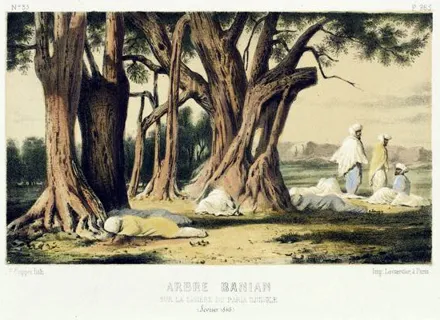
Photo: After Alexei Dmitriyevich Saltykov, Public domain, via Wikimedia Commons
Ask any Chamorro about the taotaomo'na and watch what happens. The voice drops. Someone glances toward the jungle line. Somebody's mom, sitting quietly the whole conversation, suddenly has a story she's never told at the dinner table.
These aren't campfire tales we tell for fun. They're family property. And whether you grew up in Garapan or Gallup, they have a way of finding you anyway.
Who — or What — Are the Taotaomo'na?
The word itself says it all: taotao means people, mo'na means before, the ones who came first. The taotaomo'na are the ancient spirits of the Chamorro ancestors, believed to still occupy the land they walked — the jungles, the limestone caves, the old latte stone sites, the banyan trees with roots that hang like curtains.
They're not demons in the Hollywood sense. They're more like landlords. The land was theirs first, and if you're going to pass through it, you'd better show respect.
That respect comes with rules, and every Chamorro kid learns them before they can ride a bike:
- Don't whistle at night. Whistling calls them, or at least announces you.
- Ask permission before entering the jungle or picking fruit. A quiet "guest I'm just passing through" — literally, guest, I'm only passing — is the standard courtesy.
- Never be loud or disrespectful near ancient sites. The latte stones aren't just rocks.
- If you feel watched, don't turn around. Just leave politely.
Skip the etiquette, the old folks say, and you might come home with bruises you can't explain, a fever that doctors can't diagnose, or worse — something that follows you back.
The Stories We Don't Tell Lightly
Every family's version is a little different, but the shape of the stories is remarkably consistent across the islands.
There's the classic: a man takes a shortcut through the jungle at dusk, laughing loudly with friends, mocking the old warnings. He stumbles on nothing at all. By morning his leg is swollen black and blue, and no hospital can explain it. The remedy is always the same — a suruhåna, a traditional healer, names what happened and sets it right with prayer and herbs, because she understands the arrangement between the living and those who came before.
There's the white lady of Mount Tapochau, the highest peak on Saipan — a figure seen standing near the road at night, gone when drivers turn back for a second look. Some say she's a woman lost long ago; others say she's something much older wearing a newer story.
And then there are the small moments people carry for decades. The dog that wouldn't stop barking at an empty corner of the yard. The grandmother who set out a little rice and coffee "for the house" before anyone moved in. The uncle who woke up unable to move, a weight on his chest, and knew — just knew — to ask forgiveness for something he'd said that day.
You don't have to believe any of it. But you'll notice most Chamorros still don't whistle after dark. Just in case.
Grandma's Rules, American Addresses
Here's what's fascinating to those of us watching the diaspora: the stories didn't stay on island.
Talk to Chamorro families in San Diego, Seattle, or Las Vegas — communities with tens of thousands of CHamoru descendants — and the taotaomo'na are very much still in the conversation. Kids who've never stood under a banyan tree still know not to whistle at night. Families moving into a new house on the mainland still talk about asking permission. The details get adapted, sure. The "jungle" becomes the empty lot behind the subdivision. But the underlying logic — respect the land, respect those who came before, don't be loud where you don't belong — travels intact.
For second- and third-generation Chamorros especially, these stories do quiet cultural work. When your grandmother tells you a taotaomo'na story, she's not just spooking you. She's handing you a map of values: humility, deference to elders, the idea that land is never truly ours. That's a lot to pack into a ghost story, which is exactly why the genre survives.
Why We Keep Telling Them
Skeptics have their explanations, and that's fine. Heat, suggestion, an overactive amygdala in the dark. But reducing the taotaomo'na to "just stories" misses the point.
Folklore like this is how a people remember themselves. The Marianas have survived colonization, typhoons, war, and waves of migration — and through all of it, the taotaomo'na remained, stubbornly, as proof that the ancestors are still present and still owed something. That's not superstition so much as continuity.
So this Halloween, when the mainland is hanging plastic ghosts from porches, consider the real thing. Pour a little coffee. Speak softly near the old places. And whatever you do —
don't whistle after dark.
Got a family taotaomo'na story? We collect them. Send yours our way — some of the best ones we've ever heard came from readers writing in from the mainland.