The Beetle at the Base of the Trunk: What Saipan Loses When a Palm Goes Down
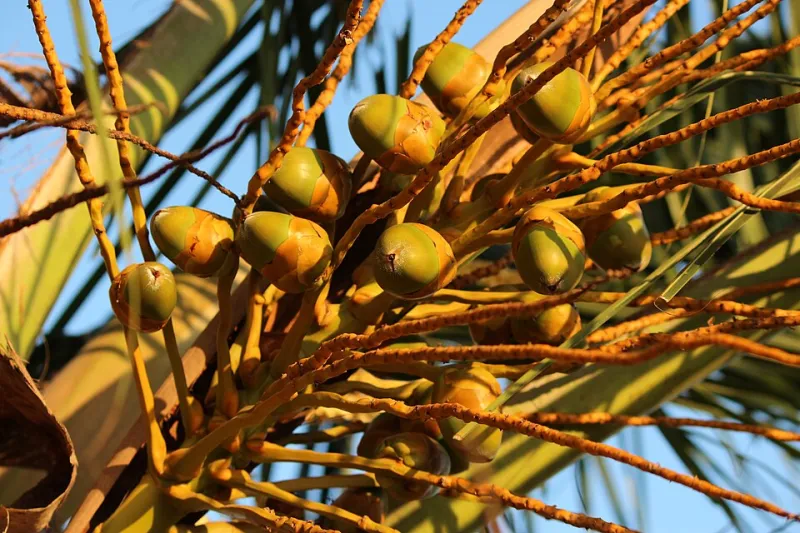
Photo: P Jeganathan, CC BY-SA 3.0, via Wikimedia Commons
The coconut rhinoceros beetle does not look like an emergency. It looks like a black plastic toy with a horn, roughly the size of a thumb, moving slowly enough that you could catch it in a cup. That is part of the problem. By the time most people notice one, the palm it came out of has been in trouble for months.
A big black beetle with a bad business model
The coconut rhinoceros beetle is an Asian species that has been hitchhiking around the Pacific for a century. It was confirmed on Guam in 2007, and it has been a recurring headache for growers, landscaping crews, and homeowners across the Marianas ever since, with survey and response work now a standing part of local environmental operations rather than a one-time campaign.
Adults fly at night, find a palm, and bore into the crown to feed on sap. Coconut palms are the favorite; other palms will do. But the feeding damage is only half the story. Females lay eggs in dead or dying palm material — fallen trunks, cut logs, sawdust piles, mulch heaps, green waste — and the larvae grow to a size that genuinely startles people who find them. A single pile of chipped palm trunks left sitting through a wet season can become a nursery. That is why the response is only partly about killing beetles. Mostly, it is about denying them real estate.
How to read a palm
You do not need a background in entomology. You need to look at the newest growth, which is where the beetle works.
- V-shaped notches cut into fronds that have not opened yet, as if someone took scissors to the spear.
- Sawdust-like frass packed into the leaf axils or pushed out of boreholes in the crown.
- Holes in the crown, often weeping sap.
- A center spear that wilts or collapses while the outer fronds still look perfectly fine.
- A dead crown on a still-standing trunk — the palm's last act, and the clearest sign of all.
Also check the leaf bases for adults wedged in tight, and check any pile of rotting palm wood on the property. Larvae are large, white, and C-shaped, and they do not announce themselves.
The part that is not about trees
The obvious losses are shade and landscaping. The quieter ones matter more.
Niyok — coconut — is threaded through Marianas cooking, celebration, and everyday generosity. Weavers work with young fronds, split and softened, and they know exactly how much material a healthy palm gives and how little a sick one does. Families have trees planted for a wedding, a funeral, a first house, a homecoming; a beetle has no opinion about any of that. Contractors who supply and install palms are watching their inventory, and homeowners are watching their yards.
There is more. Coconut crabs depend on coconuts. Tuba collectors depend on the trees. And a beach road without coconut palms would still be a beach road, but it would not look like home to anyone who grew up on it.
What detection actually looks like
Community detection is unglamorous and it works. Residents walking their own yards, checking the newest frond, photographing what they find, and reporting it instead of shrugging — that is the front line. Agencies run pheromone-baited traps and survey routes, crews remove and properly handle breeding material, and biological control using a virus that targets the beetle has been part of Pacific management for years. None of it replaces the person who notices something odd in their own backyard first.
If you find a beetle or suspect damage: photograph it, note the location, and report it to CNMI environmental or forestry authorities or your village office. Do not simply toss the beetle into the bush and hope. And do not move palm material around while you are at it — that is how this spreads.
If you are on the mainland
Most of the risk travels in trucks, cargo, and luggage, which means mainland readers are not bystanders here.
- Do not carry palm material, coconut, or green waste when you travel. Not checked, not carry-on, not in the back of a pickup.
- Do not mail palm starts, untreated wood, or soil to or from the islands.
- Clean boots, tools, and gear between gardens and between trips.
- Buy mulch from local sources and be skeptical of anything chipped from palm.
- Leave beachcombing finds where they are. A coconut in a suitcase is not a souvenir, it is a delivery vehicle.
What you can do this week
Walk your yard or your block and look up. Check the newest frond on every palm you can see. If something looks wrong — notched spears, sawdust, a drooping center — take a photo and make the call. If you have a pile of palm logs or mulch sitting behind the house, deal with it, cover it, or get rid of it properly, because that pile is the beetle's best chance.
Weavers, growers, and grandmothers have been saying for years that the palms are not scenery. They are infrastructure. The beetle is not going to be talked out of that, so the rest of us will have to pay attention instead.